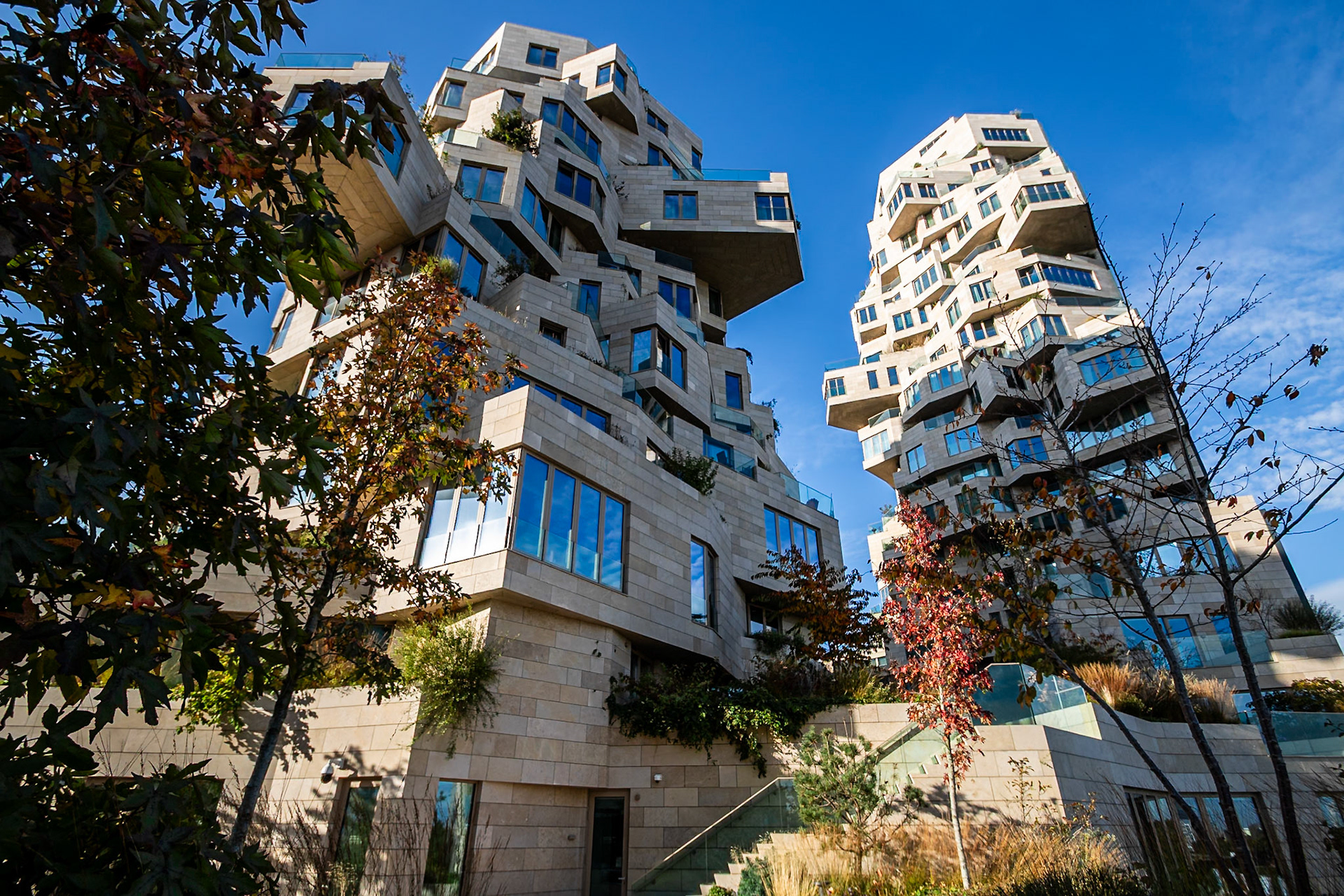
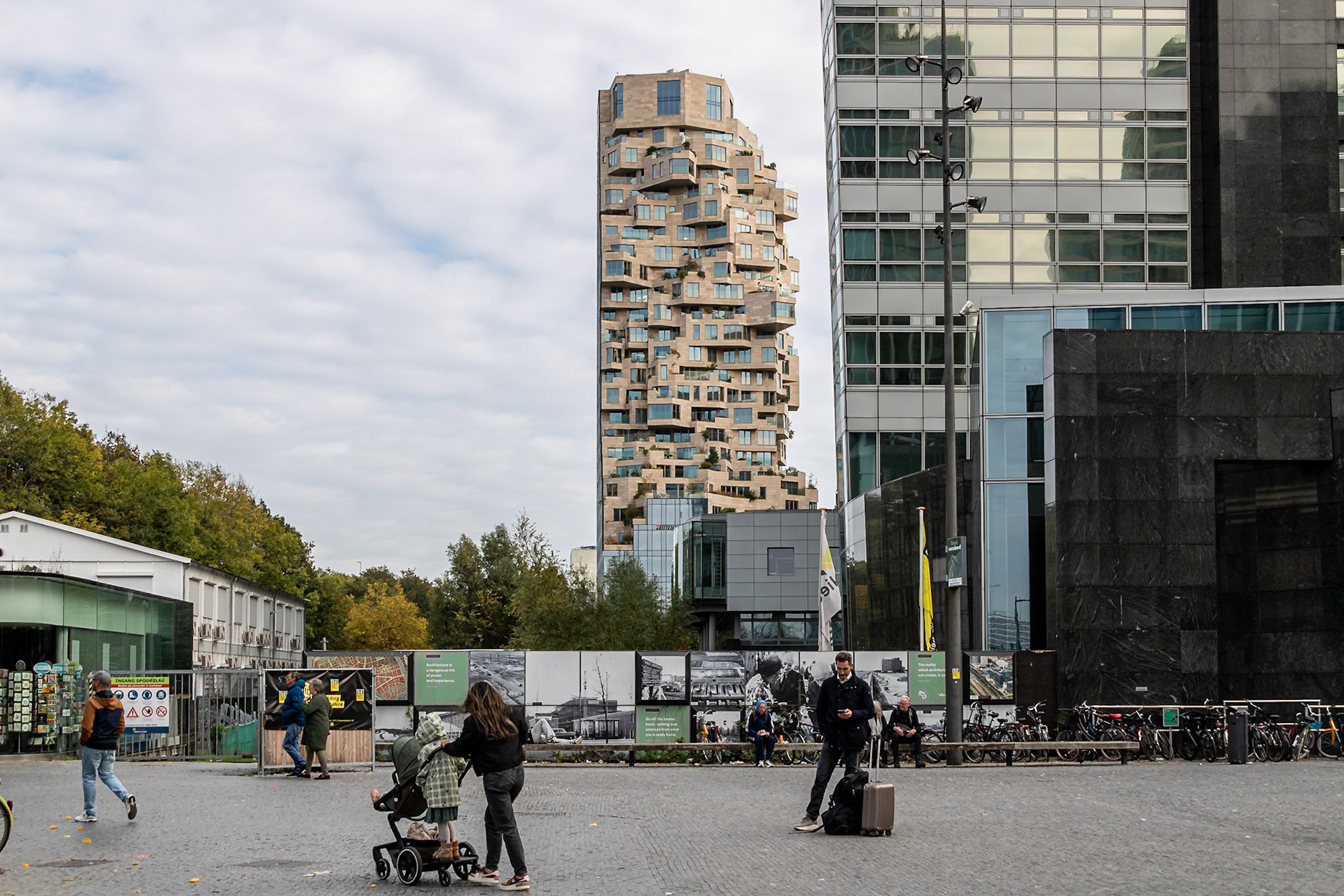
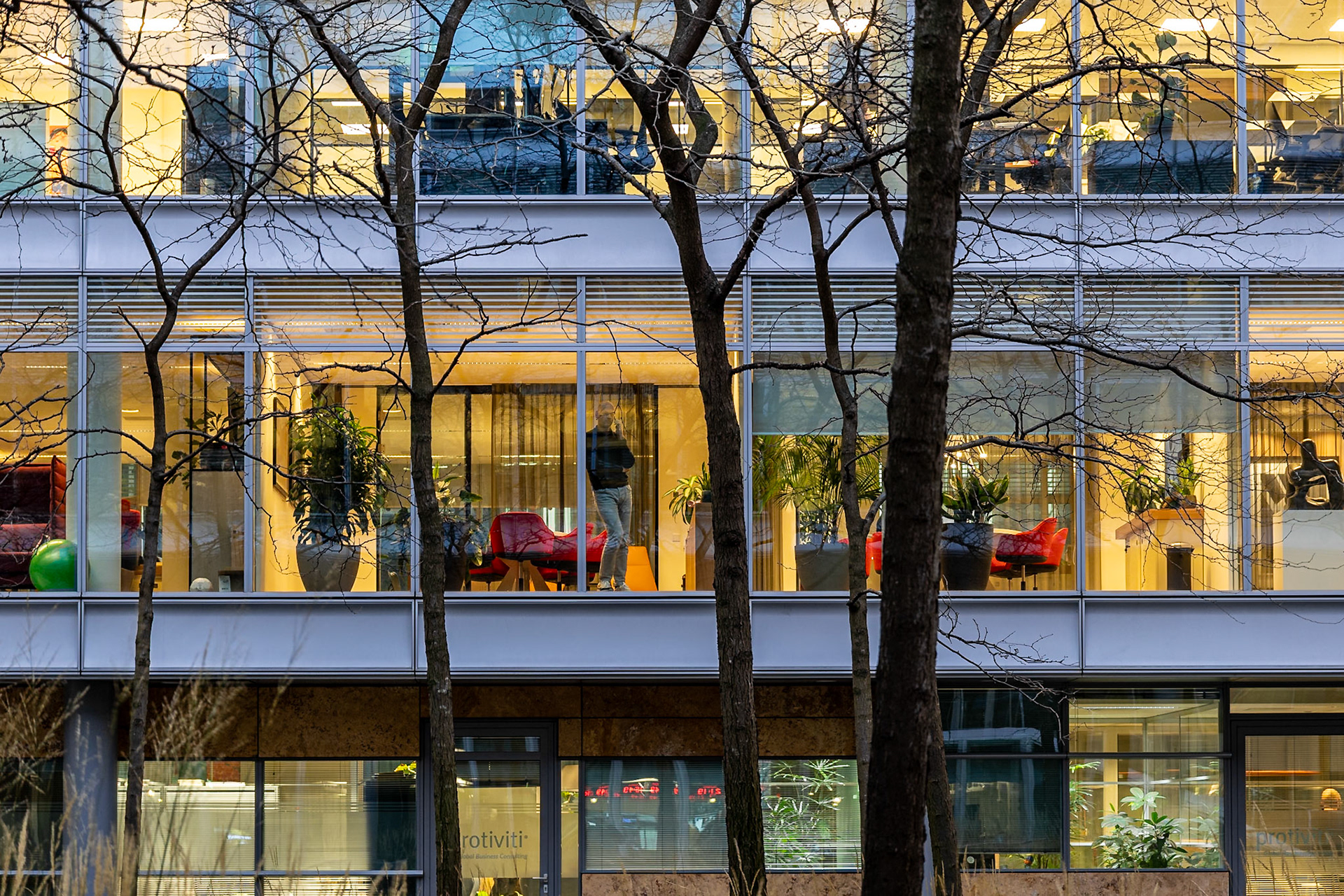
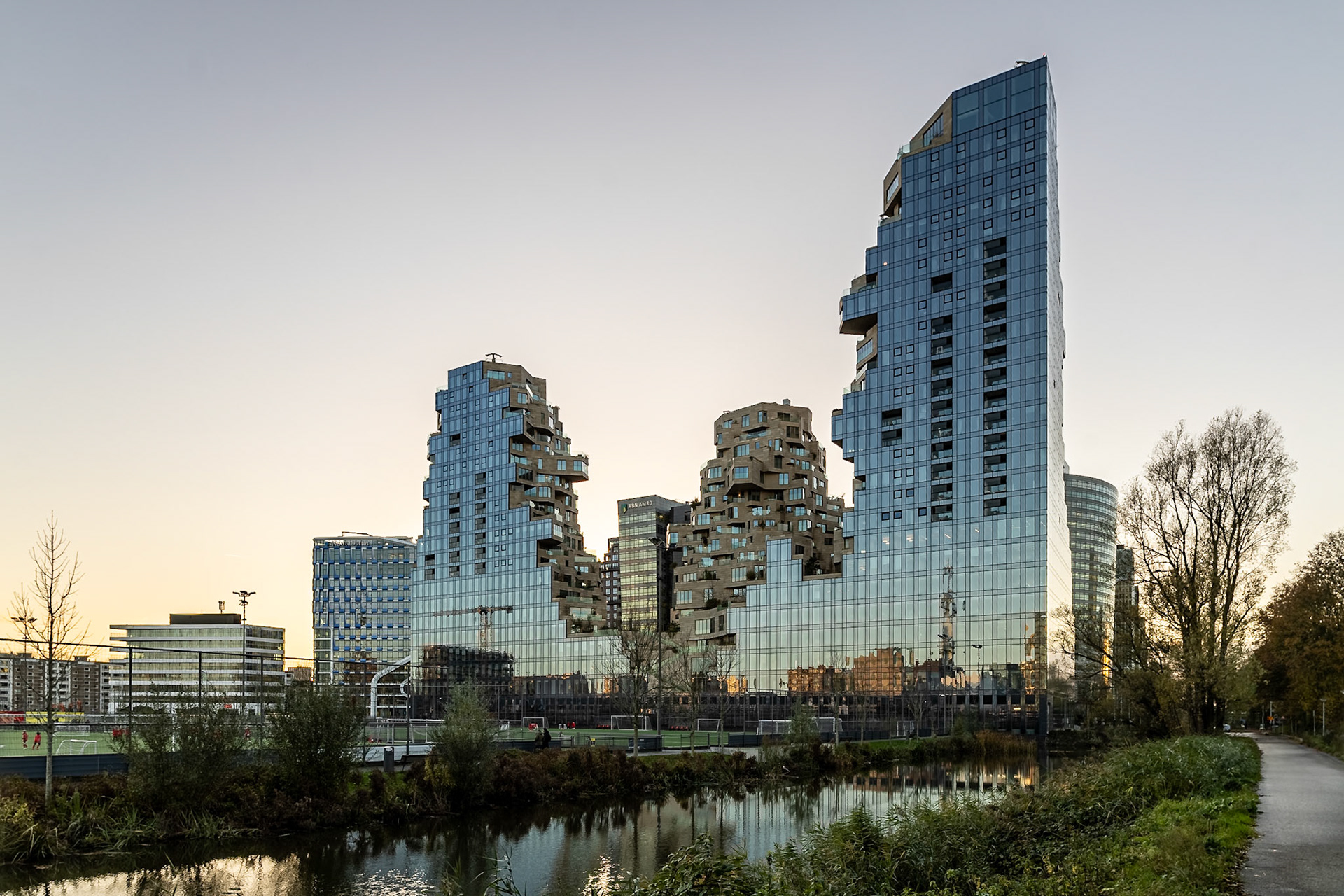
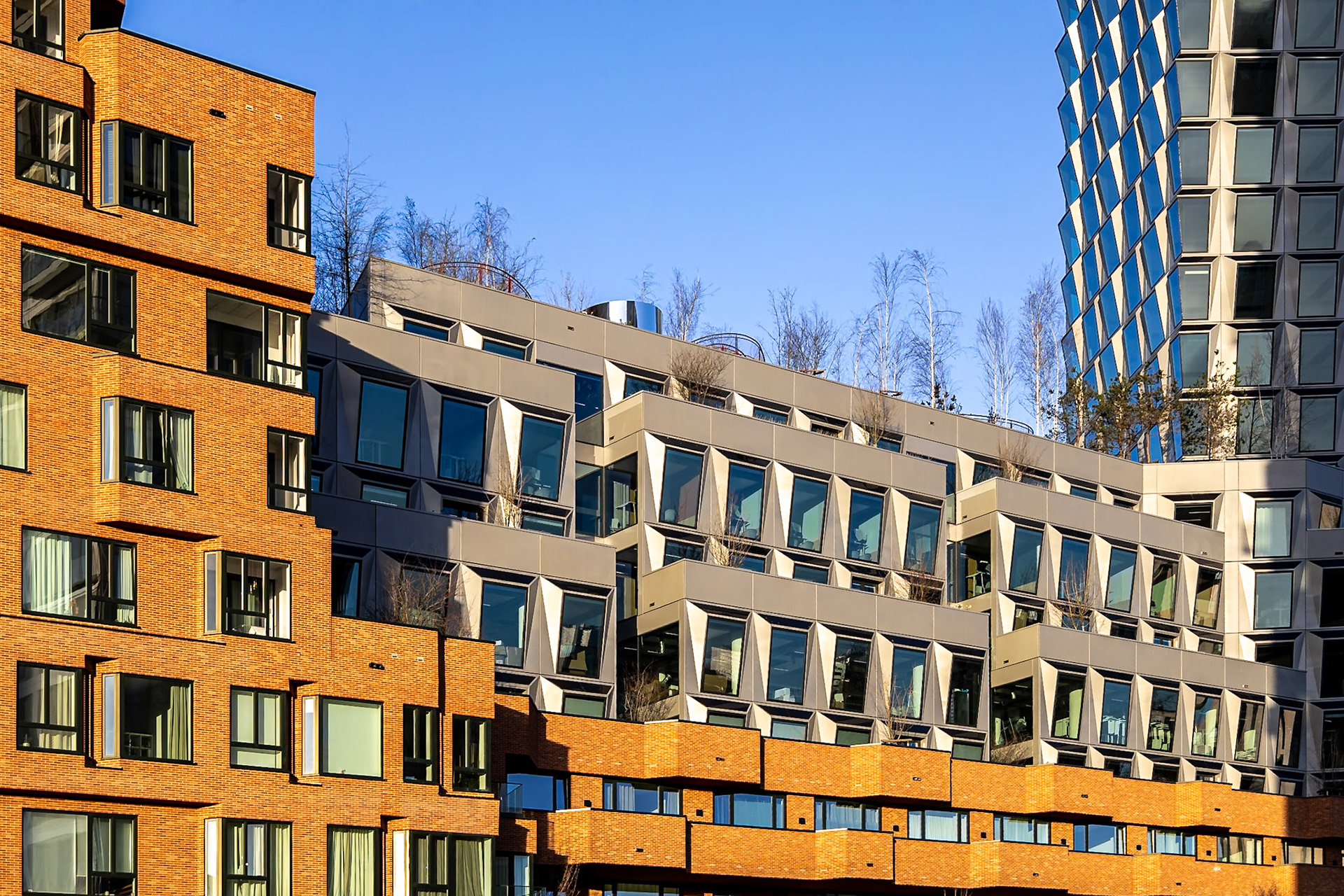
Trees on the fourth and fifth floors of Valley (MDRDV, 2022). Architect Winy Maas collaborated with landscape architect Piet Oudolf on the planting scheme. The most suitable plants were selected for each location, taking into account wind, sunlight, temperature, and maintenance. The complex incorporates 271 young trees and shrubs, along with 13,500 smaller plants. In total, Valley accommodates 220 plant species.
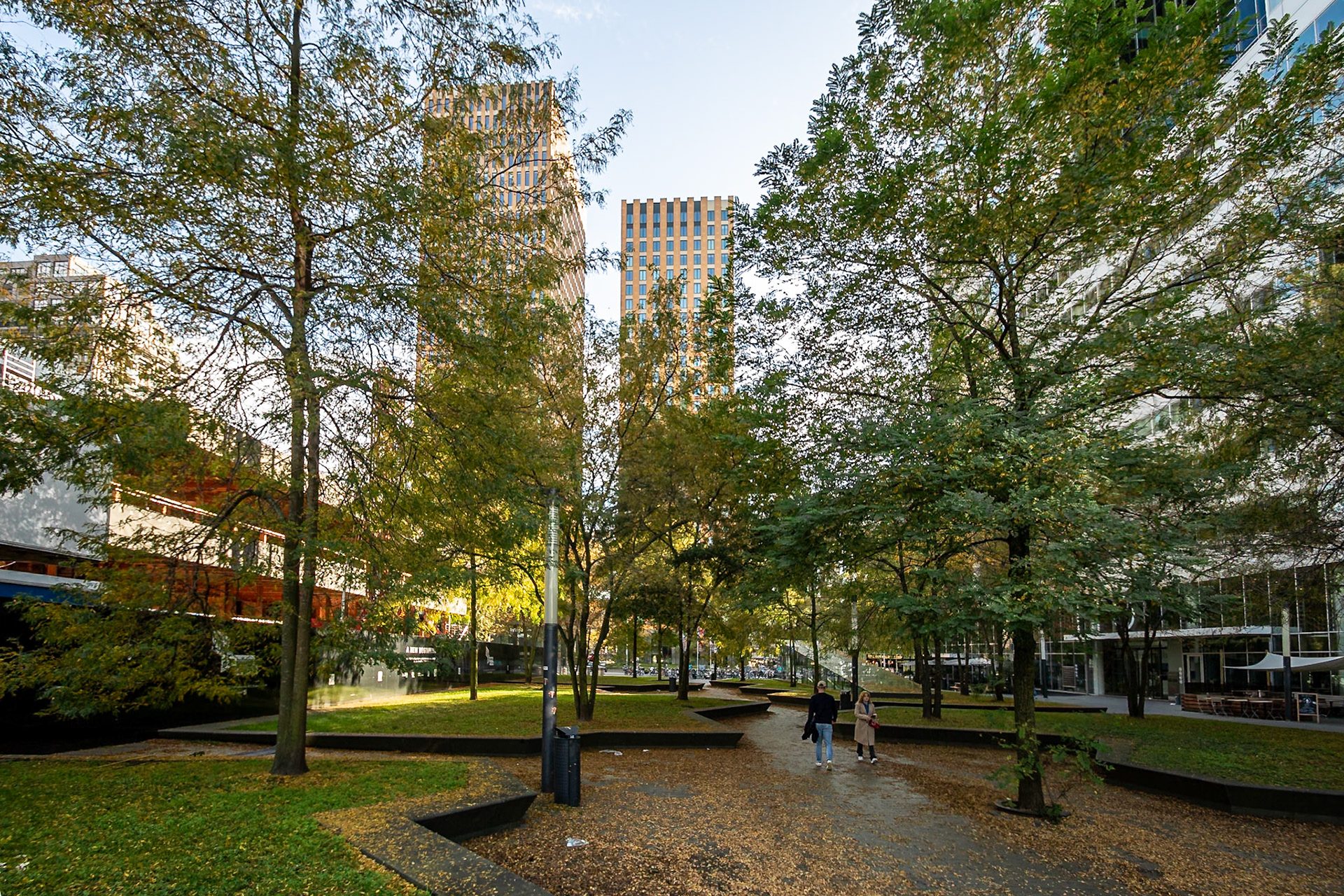
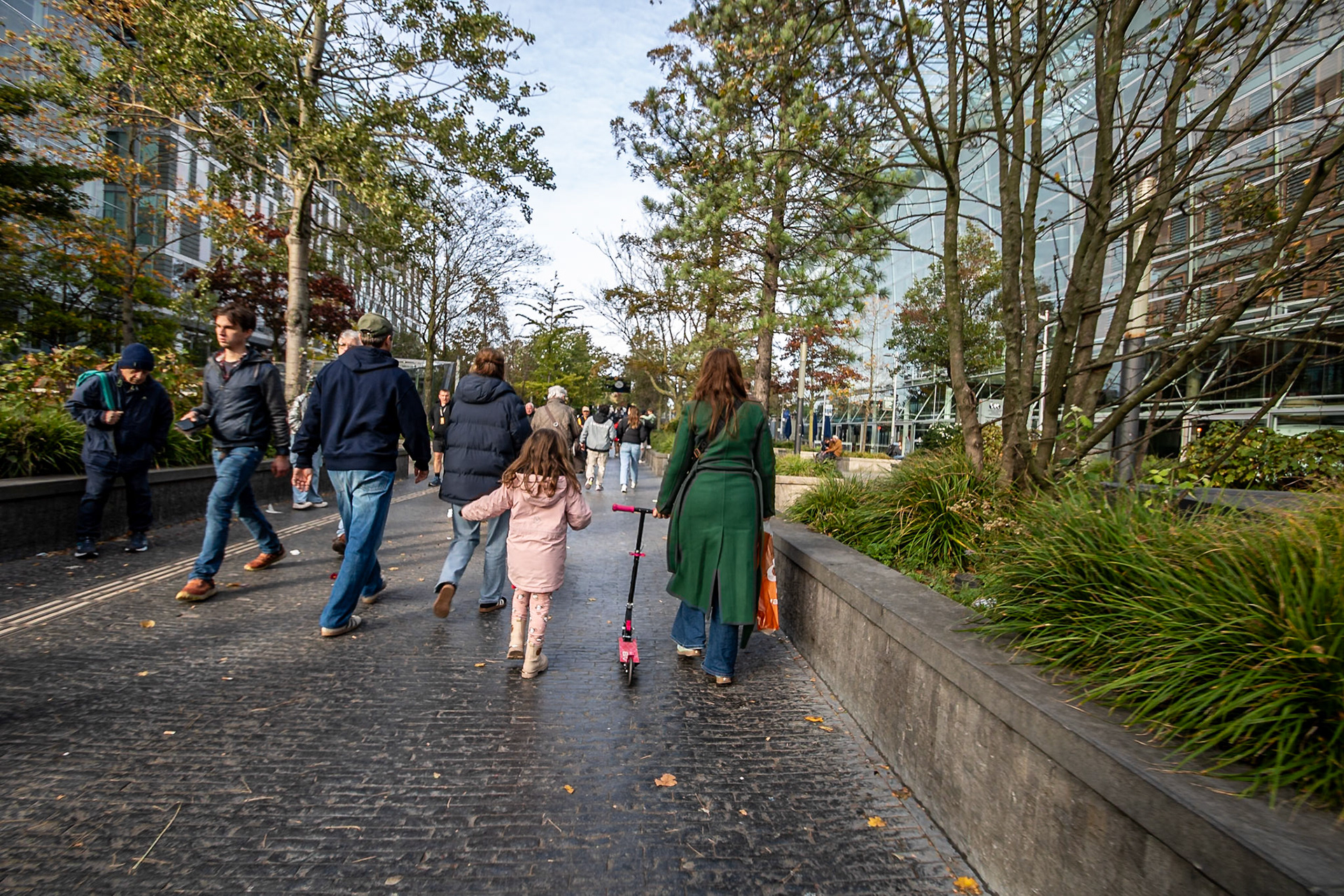
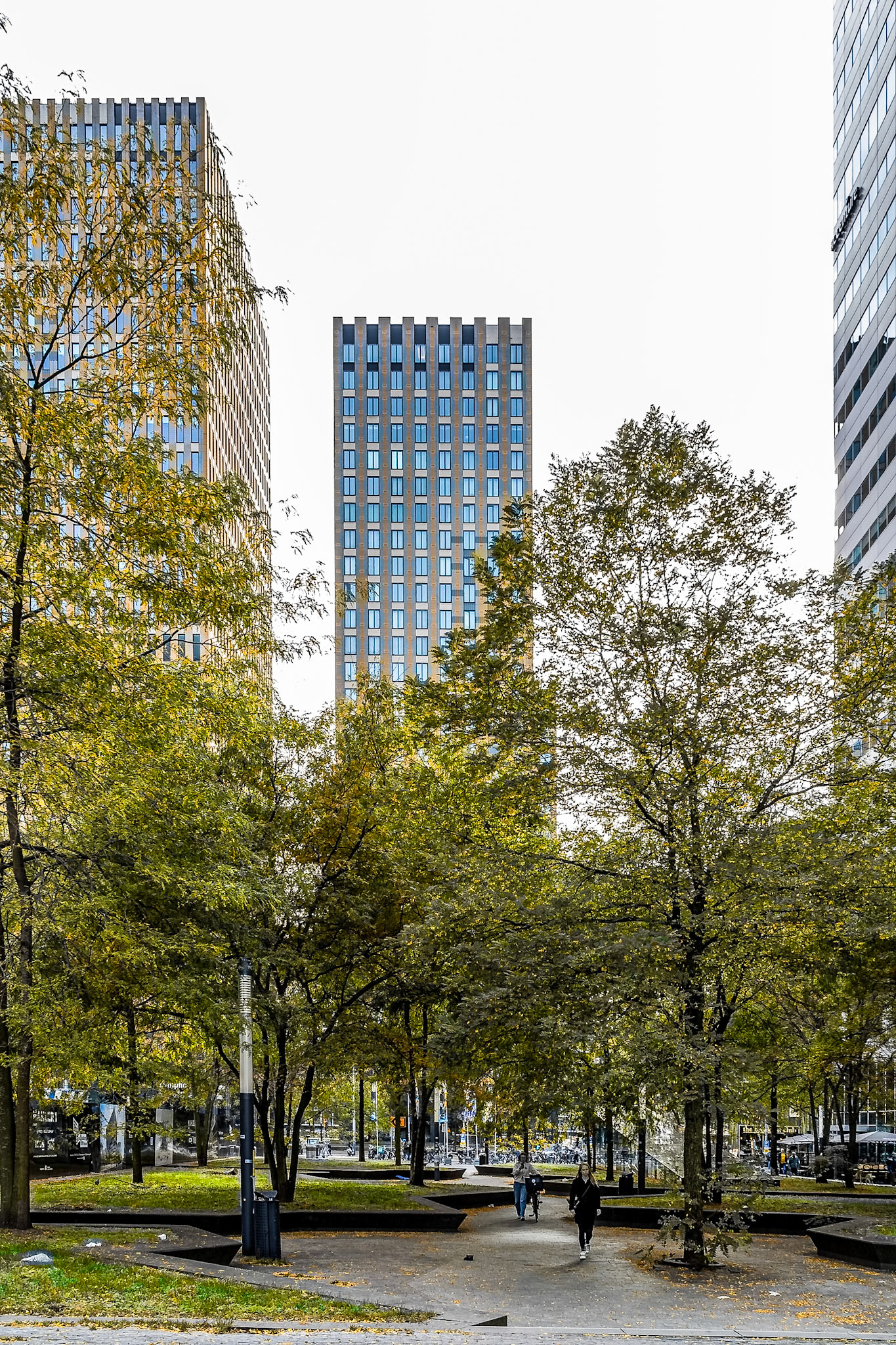
Trees on Gustav Mahlerplein contribute to the municipal goal of creating cool spots in the city.
‘Amsterdam has various policies addressing greenery, quantities, and distances. The 30% rule is not yet official policy, but we are certainly considering it. In addition, we factor in the distance to a cool spot and apply reference standards for greenery in area development.’ Geertje Wijten – Strategic Advisor, Spatial Planning and Sustainability, City of Amsterdam
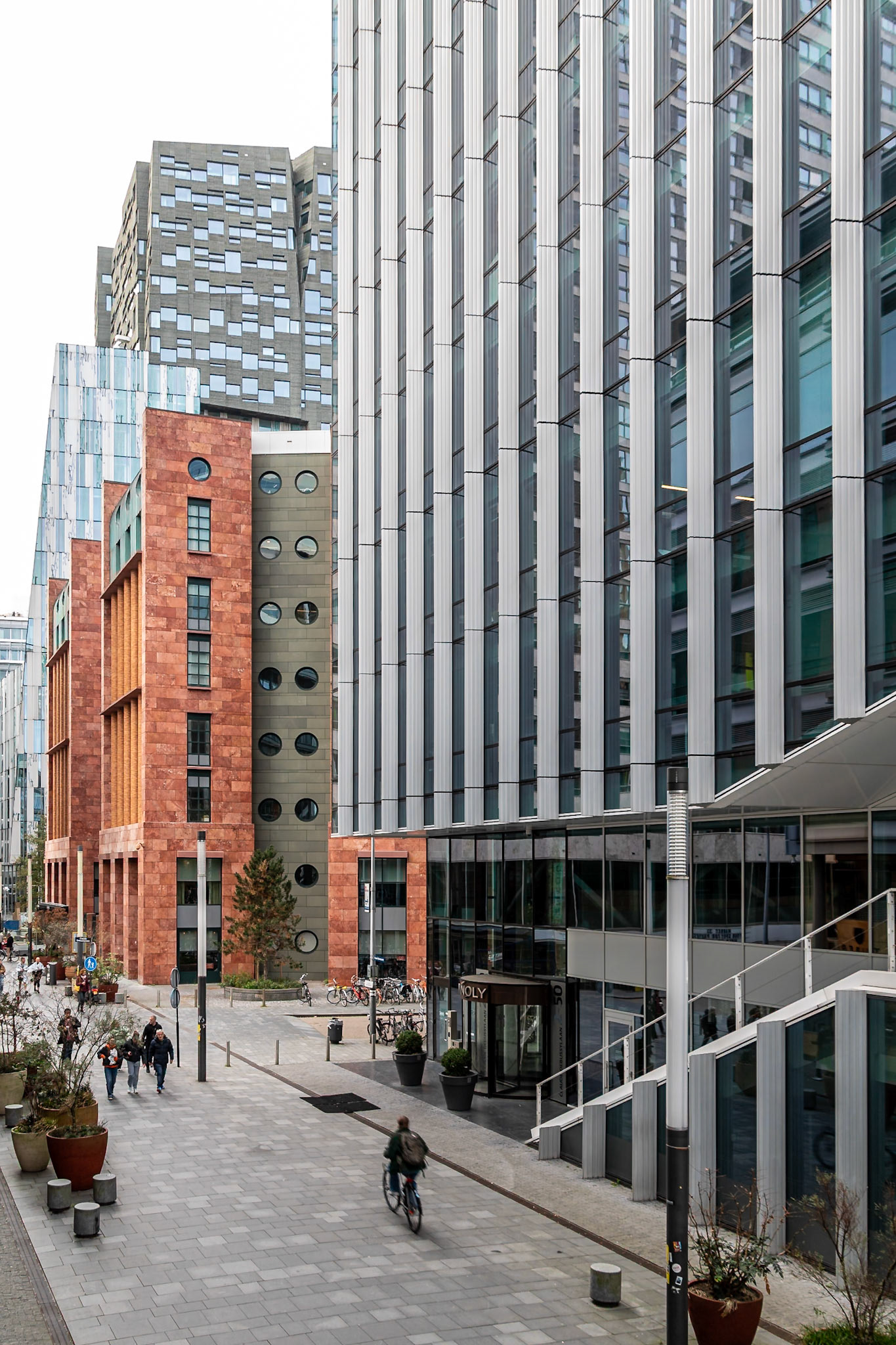
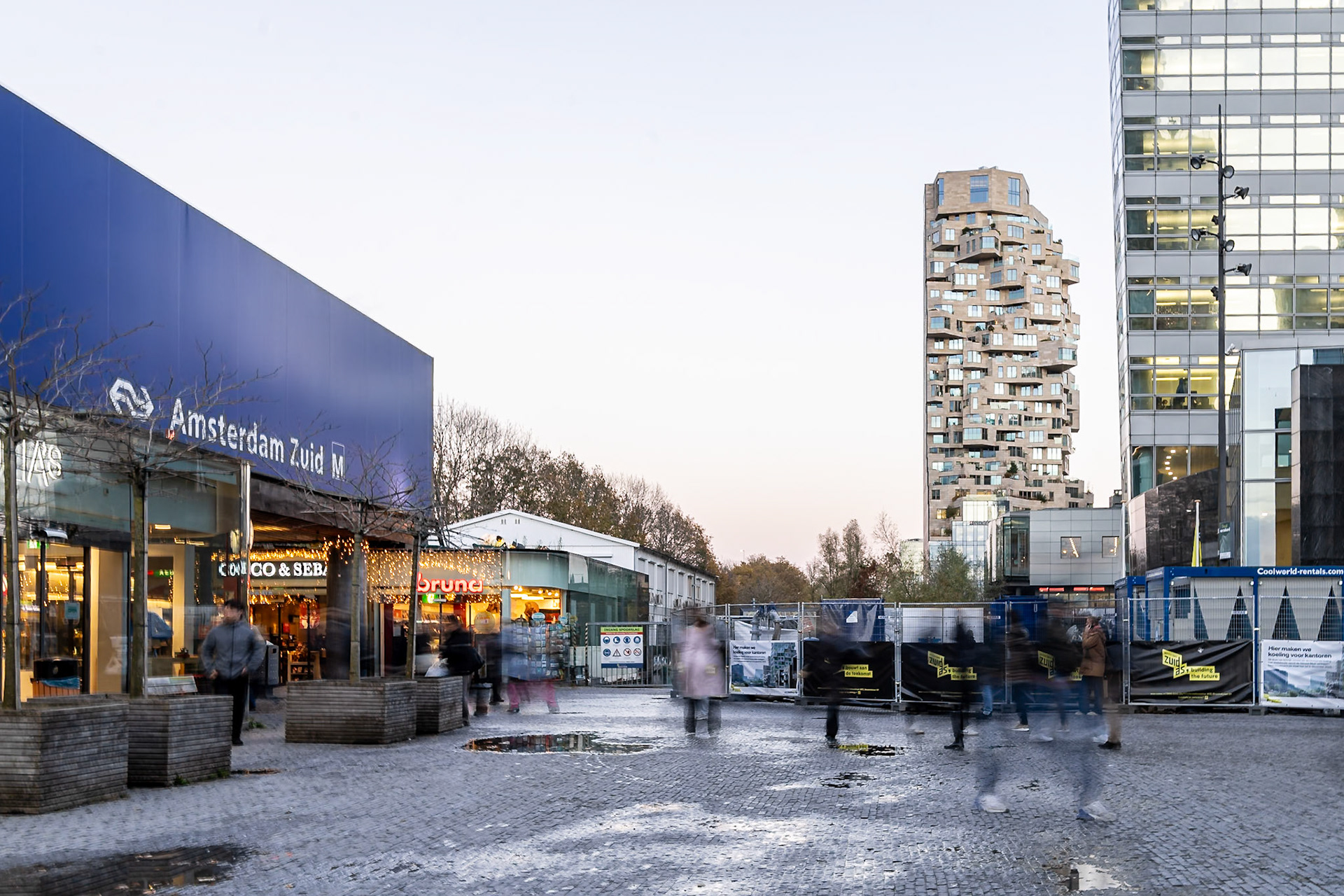
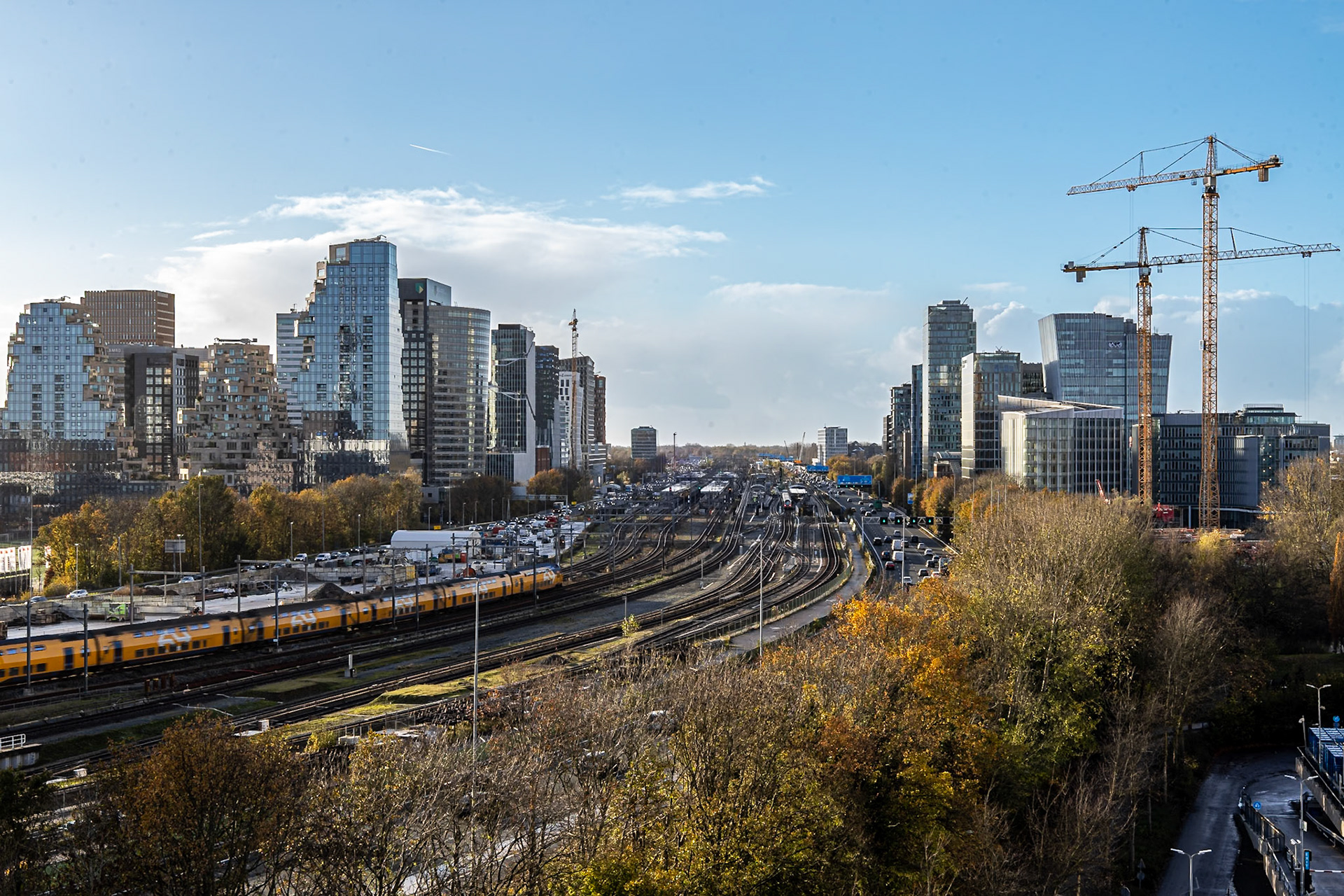
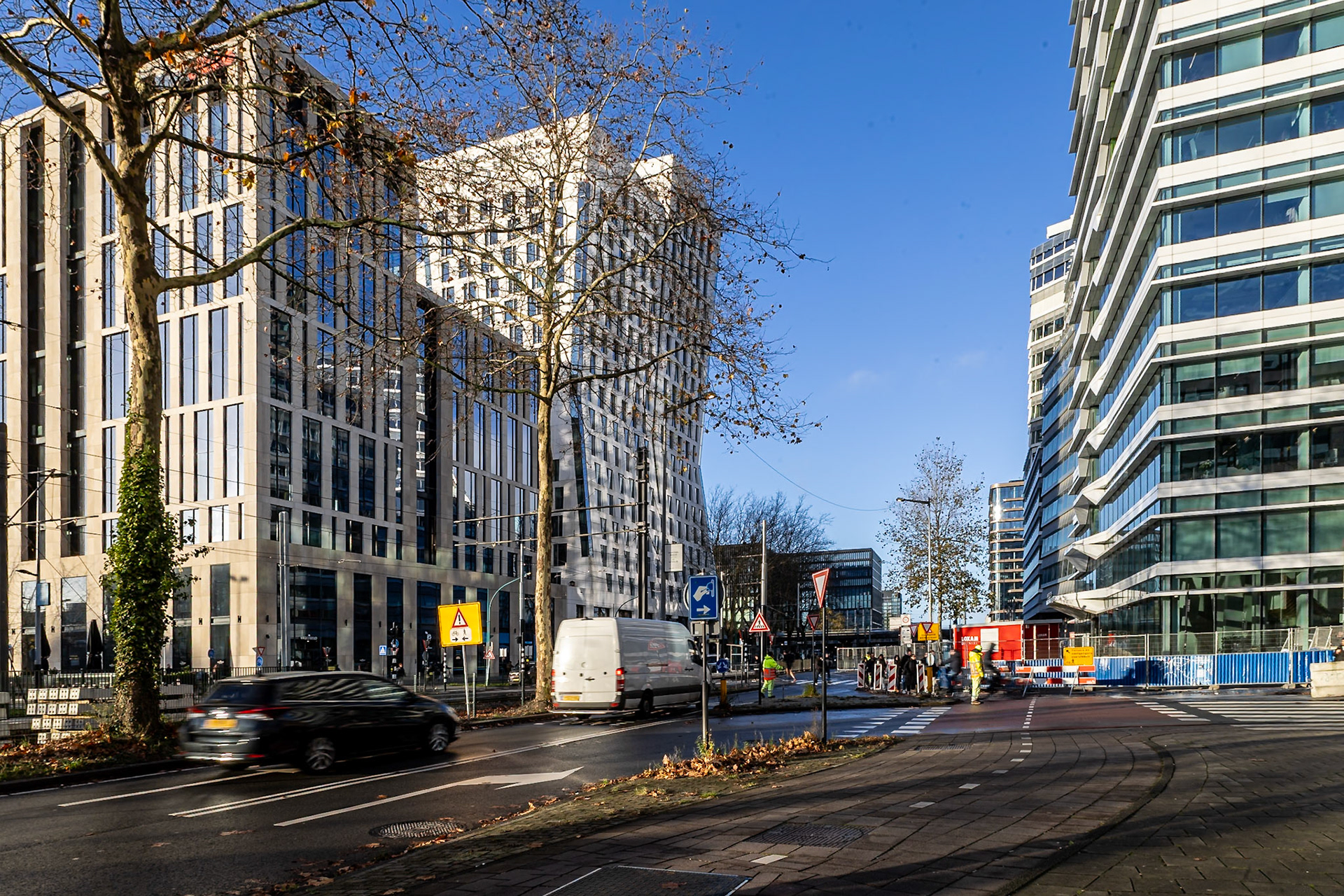
Past choices do not always contribute to a safe, healthy living environment. Ultra-compact development, limited green space, extensive paving, and infrastructure designed for heavy traffic flows characterize today’s Zuidas.
Hard surfacing and asphalt cause city temperatures to rise increasingly high in the summer. The newly planted trees along Parnassusweg will provide cooling in the long run.
Like most major cities worldwide, Amsterdam does not meet the minimum standards for green infrastructure set out in the 3-30-300 rule. According to that rule, every home, school, and workplace should have a view of at least three mature trees. Neighborhoods must have at least 30% tree canopy cover. Everyone should live or work within a 300-meter walk of a park or green outdoor area.